| Garantie LCD/Backlight (Jahre): | 3 Jahre |
| max. Pixelfehler (nach ISO 13406-2): | Klasse II |
| Panelgröße [Zoll]: | 24 |
| Pixelgröße [mm]: | 0.276 |
| Standardauflösung: | 1.920 x 1.080 (16:9) |
| Sichtbare Bildgröße/-diagonale [mm]: | 531 x 299 / 610 |
| Eingänge, Stecker: | 1x D-Sub VGA (analog), 1x DVI-D (digital), 1x HDMI (digital) |
| Bildfrequenz [Hz]: | 50 – 76 |
| max. Zeilenfrequenz / Videobandbreite [kHz/MHz]: | 24 – 83 / 205 |
| Farbmodi Preset/User: | 3 / 1 |
| LCD drehbar / Portrait Modus: | Nein / Nein |
| LCD Display Arm Option: | Ja |
| Ausstattung: | 1x D-Sub VGA Kabel, Netzkabel, Kurzanleitung |
| Monitormaße (B x H x T) [mm]: | 570 x 413 x 184 (mit Fuß) |
| Gewicht [kg]: | 4,9 |
| Prüfzeichen: | TCO03, TÜV GS, EN60950, CE, TÜV Ergonomie, ISO 13406-2, Energy Star |
| Leistungsaufnahme On/Stand-by/Off [Watt]: | < 49 / 1 / k.A. (Herstellerangabe) |
Einleitung
„Full HD für jeden!“ – getreu diesem Motto bringt auch BenQ mit dem G2411HD einen 16:9-Monitor mit nativer Full-HD-Auflösung zu einem geringen Kaufpreis auf den stark umkämpften Markt. Eine andere Richtung schlägt BenQ dagegen im Design ein: Im Gegensatz zu den meisten anderen Herstellern, die ihre Produkte mit Hochglanzlack versehen, setzt BenQ beim G2411HD konsequent auf ein schlichtes und mattes Design.
Durch den niedrigen Preis zielt er insbesondere auf preisbewusste Käufer und Office-Anwender. Dank der Reaktionszeit von 2 ms (grau-zu-grau) sollen aber auch Gamer auf ihre Kosten kommen.
Zum Multimedia-Monitor wird das Gerät durch seinen HDMI-Anschluss und der Full-HD-Fähigkeit, wodurch der Verbindung mit moderner Peripherie wie Blu-ray-Playern oder Next-Gen-Konsolen nichts im Wege steht.
Auf den ersten Blick versprechen all diese Merkmale Qualität. Inwiefern es BenQ schafft, diese bei einem so preisgünstigen Gerät einzuhalten, soll dieser Testbericht klären.
Alle im Test veröffentlichten Ergebnisse wurden am digitalen Eingang einer ATI Powercolor X1950Pro ermittelt. Die Messungen zur Kalibrierung wurden mit der iColor Software in Verbindung mit dem Kolorimeter DTP94 von Quato sowie der Software „Kolorimeter HCFR“ durchgeführt. Für den Test der Videofunktionen und der Spieltauglichkeit kamen Sonys Blu-ray-Player BDP-S350E und die Playstation 3 von Sony zum Einsatz.


Lieferumfang
Der BenQ G2411HD wird in einem kompakten Karton geliefert. Gehäuse und Standfuß liegen in Einzelteilen vor, doch mit einem Blick auf die gedruckte Kurzanleitung stellt dies kein Problem dar: Die Montage gelingt sehr einfach und mit einem Klick sitzt das Gehäuse fest im Fuß.
Der Lieferumfang kann als spartanisch beschrieben werden. Vermutlich zur Kostenreduzierung verzichtet BenQ sowohl auf DVI- als auch HDMI-Kabel und legt zur Verbindung mit dem PC nur ein analoges D-Sub VGA-Kabel bei.

Dazu gesellen sich ein Kaltgerätekabel zur Stromversorgung des integrierten Netzteils, Sicherheitsanweisungen, Garantiebedingungen sowie die bereits angesprochene Kurzanleitung. Die ebenfalls beiliegende CD enthält die vollständige Anleitung in digitaler Form sowie ein Farbprofil. Auf eine komplette gedruckte Anleitung verzichtet BenQ.
Optik und Mechanik
Der BenQ G2411HD präsentiert sich in Opposition zum Markttrend in einem matten und schlichten Design. Asymmetrisch zum Displayrahmen ragt das rechts unten angebrachte Control-Panel als Zierelement heraus. Die Rückseite ist ebenfalls in mattschwarz gehalten.


Der breite Standfuß erfüllt seinen Zweck gut. Die Noppen auf dessen Unterseite verhindern das Rutschen auf der Schreibtischoberfläche. Insgesamt nimmt die Konstruktion aber leicht Schwingungen auf – selbst ein Ruckler am Tisch reicht, um den Monitor zum Schwingen zu bringen.

An der Rückseite des Standfußes befindet sich praktischerweise ein eingelassener Kabelhalter, durch den die Anschlusskabel geführt werden können. Das Lösen des Fußes benötigt etwas Kraft, sollte aber mit ein wenig Geschick und Routine hinzubekommen sein.


Aus blickwinkelergonomischer Sicht brennt der G2411HD auf Sparflamme. Obwohl die Homepage von BenQ einen Drehbereich des Gerätes angibt, beschränkt sich die Mechanik nur auf die klassische Neigefunktion. Deren Bereich erstreckt sich von -2° bis +20°. Die Qualität der Mechanik weiß dennoch zu gefallen: Das Verstellen der Neigung funktioniert sehr leichtgängig – mit leichtem, aber angenehmem Druck – und ist mit nur einer Hand möglich. Dabei bleibt der G2411HD absolut ruhig und gibt kein Knarzen oder Knacken von sich.


Auf der Rückseite befindet sich eine VESA-100-Vorrichtung mit vier Gewindelöchern, die es erlaubt, den TFT mit einer entsprechenden Halterung an einer Wand oder einem Monitorarm zu montieren. Unterhalb befinden sich die Anschlüsse für die Video-Signale sowie der Kaltgeräteeingang zur Stromversorgung des internen Netzteils.

Alle vier Ecken des Gehäuses wurden von BenQ in irgendeiner Art gestaltet: Oben links weist ein Aufkleber auf die Features des Monitors hin, während rechts oben in dezenter Schrift der Name des Geräts aufgedruckt ist. In der linken unteren Ecke befindet sich das silbern-glänzende und angeraute BenQ-Logo.


Insgesamt ist das Gehäuse sehr gut verarbeitet. Scharfe Kanten oder spitze Ecken sind nicht vorhanden. Das Design wirkt im Gesamteindruck sehr stimmig und auch an der Mechanik sind keine Mängel zu erkennen.

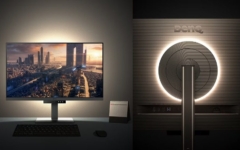


Oberhalb der VESA-Mechanik eingelassene Lüftungsschlitze übernehmen die Wärmeabfuhr. Leider sind die Schlitze breit genug, als dass es denkbar scheint, dass sich eine Gewitterfliege zwischen Panel und Hintergrundbeleuchtung verirrt. Um dem vorzubeugen, sollte besonders im Sommer Vorsicht geboten sein.

Leider bleibt unser Exemplar in der Geräuschentwicklung nicht völlig unhörbar. Bei Helligkeitswerten zwischen 0 und 94 macht der Backlightinverter durch ein leises Brummen auf sich aufmerksam. Bei der Arbeit vor dem Bildschirm ist dieses Geräusch aber nur noch leise vernehmbar. Silent-Fans werden sich durch die vorhandene Geräuschentwicklung dennoch gestört fühlen.
Anzumerken bleibt, dass die Geräuschentwicklung einer gewissen Serienstreuung unterliegt und es selbst unter Geräten innerhalb einer Serie zu erheblichen Abweichungen kommen kann.
Stromverbrauch
Gemessen an der Displaygröße ist der Stromverbrauch erfreulich gering und bleibt stets unter den Angaben des Herstellers. Sehr gut ist der Stromverbrauch bei niedrigster Helligkeit. Mit 51 cd/m² ist der Helligkeitswert zwar nicht besonders hoch, dafür wird der Besitzer mit niedrigen 17,6 Watt Stromverbrauch belohnt. So bemerkenswert das sein mag: Tatsache ist, das TFTs mit TN-Technologie gegenüber ihren VA- und IPS-Pendants in Bezug auf den Stromverbrauch grundsätzlich besser abschneiden.
| Hersteller | Gemessen | |
| Betrieb maximal | < 49 W | 46,7 W |
| Werkseinstellung | k.A. | 43,3 W |
| Standby | < 1 W | 0,8 W |
| Ausgeschaltet | k.A. | 0,5 W |
| 140 cd/m² | k.A. | 30,8 W |
| 0 % Helligkeit | k.A. | 17,6 W |