| Garantie LCD/Backlight (Jahre): | 3 inkl. Vor-Ort-Abholservice mit Leihgerätestellung |
| max. Pixelfehler (nach ISO 13406-2): | Klasse II |
| Panelgröße [Zoll]: | 24 |
| Pixelgröße [mm]: | 0.2768 |
| Standardauflösung: | 1.920 x 1.080 (16:9) |
| Sichtbare Bildgröße/-diagonale [mm]: | 531,36 x 298,89 / 610 |
| Eingänge, Stecker: | 1 x D-Sub (analog), 1 x DVI-D (digital), 1 x HDMI (digital) |
| Bildfrequenz [Hz]: | 50 – 85 (erfolgreich getestet ab 48) |
| max. Zeilenfrequenz/Videobandbreite [kHz/MHz]: | 30 – 81 / 164 |
| Farbmodi Preset/User: | 3 / 1 |
| LCD drehbar/Portrait Modus: | Ja / Ja |
| LCD Display Arm Option: | Ja |
| Ausstattung: | Netzkabel, DVI-D-Kabel (single-link), D-Sub HD15, 3,5mm Klinkenstecker (Audio), eingebaute 3W Lautsprecher (Stereo), Handbuch, Garantiekarte, Treiber-CD |
| Monitormaße (B x H x T) [mm]: | 572,8 x 420,4 x 249,9 (mit Fuß) |
| Gewicht [kg]: | 8,4 (mit Fuß), 5,2 (ohne Fuß) |
| Prüfzeichen: | CE, Energy Star, ISO 13406-2 |
| Leistungsaufnahme On/Stand-by/Off [Watt]: | 48 (typ.) / 1,5 / 1 (max.) |
Einleitung
Der Samsung 2494HM ist die konsequente Weiterentwicklung des bereits zuvor hier auf PRAD getesteten 2493HM. Unser neuer Test soll zeigen, ob Samsung im Rahmen der Modellpflege auch einen Fortschritt für den Kunden erzielen konnte.
Designtechnisch an vorderster Front glänzt das 24 Zoll Full-HD Display in Klavierlackoptik mit einer Chrom Applikation am unteren Rand. Für das geschulte Auge zeigt sich jedoch keine einfache Kopie des Vorgängers, sondern eine Reihe angenehmer Verbesserungen im Detail, sowie der Formatwechsel von 16:10 zum nochmals verbreiterten Seitenverhältnis von 16:9.
Neben den drei Anschlusstypen D-Sub HD15, DVI-D und HDMI ist auch noch ein 3,5 mm Klinkenstecker vorhanden, wodurch die integrierten 3 Watt Stereolautsprecher sowohl bei der Wiedergabe von HD-Inhalten, als auch bei sonstigen Gelegenheiten verwendet werden können.
Dieser Monitor präsentiert sich auf den ersten Blick also als ein optisch durchaus attraktives und somit wohnzimmertaugliches Multimedia-Gerät, welches schon aufgrund seines Seitenverhältnisses, der flotten Reaktionszeit von 5 ms und seiner Full-HD-Auflösung ideal für Filme und Spiele geeignet zu sein scheint.
Ob dieser erste Eindruck aber auch umgesetzt werden konnte und inwiefern Stärken und Schwächen vorhanden sind, soll der ausführliche Test zeigen. Auch wenn keine direkte Gegenüberstellung zum Vorgängermodell im Rahmen dieses Tests erfolgen wird, so sind an entsprechenden Stellen natürlich Vergleiche vorhanden.

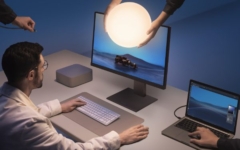

Getestet wird im PC-Betrieb an einer Sparkle GeForce 8800GTS 512 (G92); die Videowiedergabe wird sowohl mit einem PC über DVI als auch mit einer PS3 und einem HDMI-Kabel realisiert. Für den analogen D-Sub Anschluss wird außerdem ein IBM T42p Notebook mit FireGL/T2 Grafikkarte sowie ein Adapter DVI-I auf D-Sub für die zuvor genannte 8800GTS genutzt. Zusätzlich wird ein Gretag Macbeth EyeOne Display2 Kolorimeter in Zusammenspiel mit der iColor Display 3.5.0.0 Software für die Messungen eingesetzt. Für die Input Lag Bestimmung wird die Software SMTT verwendet.
Lieferumfang
Der Karton von Samsung ist, dank des integrierten Tragegriffs auf der Oberseite, gut zu transportieren. Im Inneren des Kartons ist der vormontierte 24-Zöller sicher zwischen Styroporschalen eingebettet. Umgeben von einer weiteren Polstertüte ist das eigentliche Gerät mit Schutzfolien gegen Kratzer auf den hochglänzenden Teilen und dem matten Panel geschützt. Eine stabile Transportsicherung ist ebenfalls zu finden.


Als Zubehör legt Samsung seinem neuen Sprössling jeweils ein DVI-D- (Single Link), D-Sub HD15- und USB-Kabel, sowie ein 3,5 mm Audiokabel mit Klinkenstecker und ein Stromkabel bei. Dies reicht natürlich aus um den Monitor an den PC anzuschließen, ein zusätzliches HDMI-Kabel wäre dennoch eine erfreuliche Beigabe gewesen.
Eine Treiber-CD sowie ein Erste-Schritte-Faltblatt gehören natürlich ebenfalls zum Lieferumfang.

Das fehlende HDMI-Kabel ist zwar bedauerlich, kann aber verkraftet werden, da ansonsten die beigelegten Kabel vollständig sind und auch qualitativ einen hochwertigen Eindruck machen.
Optik und Mechanik
Beim Design musste sich Samsung nicht viel Neues einfallen lassen, war doch schon der 2493HM ein ansehnliches Gerät. So oder ähnlich müssen es sich auch die Verantwortlichen gedacht haben, denn das Design ist bis auf Kleinigkeiten beibehalten worden. Leicht abgerundete Gehäuseseiten, hochglänzende Klavierlackoptik in schwarz und eine konkav geformte Chromleiste an der Unterkante lassen den 2494HM ansehnlich erstrahlen.



Der Monitor kann sich so nicht nur im Wohnzimmer sehen lassen, er bietet außerdem auch noch eine Höhenverstellung um 9,9 cm in der Höhe.


Trotz einem Seitenverhältnis von 16:9 bietet das Gerät eine Pivotfunktion. Bevor Sie das Gerät allerdings in diese Position drehen, sollten Sie unbedingt den Monitor nach hinten neigen, da ansonsten eine Ecke des Rahmens mit dem Standfuß kollidiert und somit Kratzer verursachen kann. Die exakte Ausrichtung ist allerdings weder in der klassischen Breitbildansicht noch im Portraitmodus gegeben, da kein passender Anschlag in der Mechanik vorhanden ist. Ein gutes Augenmaß oder aber ein Lineal helfen bei der exakten Ausrichtung.


Der Mechanismus für die Höhenverstellung ist im massiven Arm des Standfußes untergebracht. Während der 2493HM an dieser Stelle ein unangenehmes Spiel von einigen Millimetern aufwies, ist davon beim neuen 2494HM nichts zu bemerken. Die Führung ist satt und ohne nennenswertes Spiel. Dies ist eine lobenswerte Verbesserung im Vergleich zum Vorgänger.


Der seitlich am Standfuß angebrachte 2-Port USB-Hub ist im Abschnitt „Anschlüsse“ besser zu erkennen. Samsung hat dem 24-Zöller auch eine wohldimensionierte Neigevorrichtung spendiert. Mit einer Neigung von 5 Grad nach vorn und bis zu 25 Grad nach hinten, hilft es die Blickwinkelabhängigkeit des TN-Panels auszugleichen.