Einleitung
Der EW2430 gehört zu BenQ’s Multimedia-Display-Serie. Das 24 Zoll Display mit Full-HD Auflösung fällt auf durch seine elegante Klavierlack-Optik, die mit gebürsteten Aluminiumflächen in einem interessanten Kontrast steht. Neben der blickwinkelstabilen Bildwiedergabe des A-MVA Panels zählen auch die stromsparende LED-Beleuchtung und die zahlreichen Anschlussmöglichkeiten zu den technischen Vorzügen.
Als Multimedia-Experte bietet der BenQ EW2430 neben HDMI, DVI-D, VGA und Audio-Anschlüssen auch eingebaute Stereolautsprecher und ein USB-Quartett. Mit der Senseye 3-Technologie von BenQ kann der Anwender zwischen sechs voreingestellten Bildmodi wählen. Ergonomische Vorzüge bleiben dagegen im Hintergrund, hier hat sich BenQ auf die einfache Neigefunktion beschränkt.
Lieferumfang
In unserem Test hält sich der BenQ EW2430 beim mitgelieferten Zubehör an den Standard: Kabel für die Stromversorgung und VGA sowie Schnellanleitung und CD liegen bei. Für die Multimedia-Anschlüsse kommen noch je ein Audio- und USB-Kabel hinzu, DVI- und HDMI-Kabel fehlen wie so oft.

Optik und Mechanik
Mit viel schwarzem Klavierlack gibt sich der BenQ EW2430 elegant, silbern gebürstetes Aluminium am Fuß und rund ums Panel lockert das Erscheinungsbild auf. Frontseitig sieht man nur den hinterleuchteten Hauptschalter und einige dezent aufgedruckte Beschriftungen.

Der Standfuß aus echtem Metall wirkt hochwertig und gibt dem Monitor einen soliden Stand. Wie der Test zeigt, kann die Neigung rund 3 Grad nach vorn und 17 Grad nach hinten verstellt werden, das Gelenk gleitet perfekt ohne Knarzen und Klemmen. Mehr Ergonomieoptionen gibt es allerdings nicht.


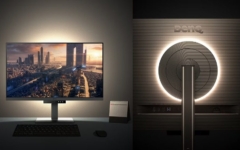
Die schwarz glänzende Rückseite nimmt rechts die Bedientasten und links den 4-fach USB-Hub auf. In der Mitte befindet sich die VESA100-Aufnahme.


Anders als bei den meisten Monitoren mit LED Backlight befindet sich das Netzteil beim EW2430 im Monitorgehäuse. Daher ist weiterhin ein Belüftungsgitter vorgesehen, und die Silhouette fällt nicht viel schlanker aus als bei CCFL-Geräten.

Technik
Eingeschaltet wird der BenQ EW2430 mit dem frontseitigen Hauptschalter, der daraufhin grün leuchtet. Im Standby wechselt er seine Farbe zu gelborange. Die Beleuchtung ist in beiden Zuständen recht hell und nicht abschalt- oder dimmbar.
Betriebsgeräusch
Der Bildschirm erwies sich im Test als völlig geräuschlos, auch wenn die Helligkeit der Hintergrundbeleuchtung reduziert wurde. Allerdings kann gerade die Geräuschentwicklung einer großen Serienstreuung unterliegen, weshalb diese Beurteilung nicht für alle Geräte einer Serie gleichermaßen zutreffen muss.
Stromverbrauch
| Helligkeit | Hersteller | Gemessen | EU 2010 | Effizienz | |
| Betrieb maximal | 100 % | 65 W * | – | – | – |
| Werkseinstellung | 100 % | – | 33,4 W | – | – |
| 140 cd/m² | 32 % | – | 21,1 W | – | 3,5 cd/W |
| Betrieb minimal | 0 % | – | 14,3 W | – | – |
| Standby-Modus | – | 0,5 W | 0,3 W | 2,0 W | – |
| Ausgeschaltet | – | – | 0,0 W | 1,0 W | – |
* siehe Text
Mit 33,4 Watt in der Werkseinstellung und 21,1 Watt am Arbeitsplatz verbraucht der EW2430 ähnlich viel Strom wie seine zahlreichen Kollegen mit gleichem Panel von AUO. Mit 3,5 cd/W liegt die Effizienz erwartungsgemäß niedriger als bei TN-Geräten, die hier bisweilen 30 Prozent mehr Licht pro Watt abgeben. Die Verbrauchswerte haben wir ohne Tonteil und USB-Hub gemessen. Den von BenQ angegebenen Maximalverbrauch von 65 Watt konnten wir selbst mit voll ausgelastetem Audioverstärker und USB-Hub nicht erreichen.



Der Standby-Verbrauch beträgt nur 0,3 Watt, damit ist sogar schon die kommende EU-Richtlinie ab 2013 erfüllt. Beim Ausschalten sinkt der Verbrauch auf Null.
Anschlüsse
Mit Bildeingängen ist der EW2430 sehr gut ausgestattet: für digitale Quellen gibt es gleich zwei HDMI-Eingänge und einen DVI-D-Eingang, dazu kommt noch ein VGA-Anschluss für analoge Signale. Die drei Klinkenbuchsen sind für den Audioeingang und –ausgang sowie für einen Kopfhörer zuständig. Der Eingang des USB-Hubs befindet sich neben den anderen Buchsen auf der Rückseite unten, die vier Ausgänge sind dagegen links auf halber Höhe angebracht.

Bedienung
Bedient wird der BenQ EW2430 mit fünf Knopftasten, die rechts unten an der Rückseite des Displays angeordnet sind. Die mechanischen Tasten arbeiten sehr zuverlässig mit deutlich spürbarem Druckpunkt. Die unbeleuchtete Beschriftung ist recht dezent auf dem vorderen Panelrahmen aufgedruckt und damit bei wenig Raumlicht leider nicht mehr lesbar.


OSD
Die obere Menüleiste zeigt die Symbole der fünf Untermenüs in Form von Karteireitern. Der Reiter des jeweils aktiven Untermenüs ist grün hinterlegt. Im unteren Teil werden die jeweiligen Optionen aufgelistet.

Das OSD öffnet sich nach einem Druck auf die Menü-Taste, Untermenüs und Optionen öffnen sich mit der Enter-Taste. Für die Auswahl und viele Einstellungen sind die beiden Pfeiltasten zuständig. Einen aktivierten Punkt verlässt man, indem man mit der Menütaste eine Ebene zurückspringt. Das ist funktionell, aber nicht immer sehr intuitiv.


Das OSD wirkt – nicht zuletzt wegen der relativ geringen Zahl von Optionen – übersichtlich und verständlich, die einzelnen Punkte sind schlüssig verteilt.
Bildqualität
Die Oberfläche des A-MVA-Panels ist matt, aber nicht sehr wirksam entspiegelt. Seitliche Lichtquellen oder helle Kleidung erzeugen deutlich sichtbare Reflektionen auf dem Bildschirm.
Beim Reset stellt der Monitor folgende Werte ein: Helligkeit 100, Kontrast 50, Bildmodus Standard, Gamma 3, Farbtemperatur Normal. Die Kontrastautomatik ist dabei abgeschaltet. Diese Werte wurden für die nachfolgende Beurteilung bei Werkseinstellung verwendet.