Kabellose Stromversorgung für Elektrogeräte, das ist ein alter Traum – nicht nur von den Fans der elektronischen Kommunikation, sondern auch als praktisches Handlungsfeld für die Fernsehtechnik. Zwar wird es wohl noch mehr als ein Jahrzehnt dauern, bis eine dauerhafte Marktreife erreicht ist, doch bereits jetzt wird deutlich, dass die kabellosen Stromversorgung gute Zukunftsaussichten hat.
Wie funktioniert eine kabellose Stromversorgung überhaupt?
Die Methode der kabellosen Stromversorgung beruht auf dem Prinzip der magnetischen Resonanz, wie sie seit langen schon bekannt ist. So wundert sich niemand darüber, dass Rundfunk- oder Fernsehwellen eine kabellose Informationsübertragung sicherstellen. Dies geht nur, weil die Informationen in elektromagnetischen Wellen codiert sind, für die die Empfangsgeräte geeignete Decoder bereitstellen. Dieses Prinzip der magnetischen Resonanz kann auch auf die Nutzung anderer Energieübertragungsmöglichkeiten angewandt werden, wie es bereits seit vielen Jahren in mehreren Forschungslabors und auf internationalen Konferenzen demonstriert wurde.
So schrieb bereits 2007 ein amerikanisches Physiker-Team im bekannten und renommierten Science-Magazin über „Wireless Power Transfer“ mittels starker magnetischer Resonanzen: Mit magnetischer Resonanz in einer stark gekoppelten Vorgehensweise konnten wir experimentell nachweisen, dass es möglich ist, eine effiziente strahlungslose Kraftübertragung über Entfernungen bis zum achtfachen des Radius-Durchmessers der Spulen auf den Weg zu bringen. Wir konnten eine 60 Watt Glühlampe mit dem Transfer von elektrischem Strom mit mehr als 40 ProzentWirkungsgrad betreiben und realisierten dies bei einer Entfernung von mehr als 2 Metern zwischen der Energiequelle und dem Energieverbraucher. Wir waren abschließend in der Lage ein quantitatives Modell der Beschreibung der Kraftübertragung zu liefern.
Drahtlose Übertragung von elektrischem Strom ist in den Fällen nützlich, in denen momentane oder kontinuierliche Energie-Transfers in Systemen gebraucht werden, bei denen man aus praktischen Gründen kein Kabel verwenden kann; zum Beispiel weil das Legen der Drähte unbequem, gefährlich oder unmöglich ist. Hier kann man dann Geräte in einer Umgebung lauffähig machen, wo dies bisher undenkbar war. Dieser Ansatzpunkt, der jetzt noch in den experimentellen Kinderschuhen steckt, wird dann nach einer späteren Nutzung auf für Standardsituationen umsetzbar, bei denen heute noch Kabel zur elektrischen Energieübertragung eingesetzt werden müssen.

Wichtig für die Technik sind die Transformatoren. Transformatoren sind nichts anders als Spannungswandler, wie sie auch im Netzteil eines Fernsehers oder Notebook vorkommen. Transformatoren bestehen aus zwei dicht nebeneinander angeordneten Spulen. Auch hier wird Energie kabellos übertragen, wenn auch der Entfernung sehr kurz ist. Um diese Reichweite deutlich zu vergrößern, muss man einige komplexe Strategien verwenden. Dazu gehören spezielle Spulen und die magnetische Resonanz. Dadurch kann die Distanz auf einige Meter erhöht werden, was für viele praktische Anwendungsfälle ausreichend ist.


Magnetische Resonanz sorgt für eine starke magnetische Kopplung auf beiden Seiten – sowohl bei der Sender- wie bei der Empfängerspule. Die magnetische Resonanz sorgt wirksam dafür, dass die vom Sender gezielt in eine bestimmte Richtung des Raums ausgestrahlte Energie nur von der Empfängerantenne absorbiert werden kann.
In den Forschungsprojekten kommt gegenwärtig nur etwa 30 bis 40 Protent der ausgesandten Energie bei den Empfangseinrichtungen an. Dies wäre nicht ausreichend, um eine langfristige Umsetzung der Technik in der Praxis sicher zu stellen, denn dann wären die Energiekosten zu hoch. Aber mit einer Vielzahl von Techniken arbeitet man daran, diese Quote bis auf etwa 70 bis 80 Prozent zu steigern. Allerdings immer noch beschränkt auf einige Meter. Doch diese würde für eine moderne Wohnversorgung ausreichen, wenn die Hauptenergiequelle zentral platziert werden kann.
Dieses Jahr wurden auf der Braunschweiger Consumer Electronics Messe (CES) aber schon erste technisch funktioniere Produkte auf Basis einer mit kabelloser Stromversorgung gezeigt. Es waren aber sehr energiegenügsame Geräte wie digitale Bilderrahmen und Lampen, die von den neuen Ideen profitieren. Immerhin gibt es aber bereits kleine Lautsprecher, die für Fernseher eingesetzt werden, die an einer festen Stelle mit Kabelstrom versorgt werden. Diese Lautsprecher können aber gezielter im Raum bewegt werden und sind daher geeignet, neue Varianten in der Hörgestaltung zu erschließen.
Das auf der Ausstellung vertretene Unternehmen Powerbeam konnte auch zeigen, wie es gegenwärtig etwa 1 bis 2 Watt an Leistung kabellos übertragen kann. Zur Energieübertragung wird der Strom in einem für das Auge unsichtbaren Laser transformiert, der die Energie zu einer herkömmlichen Solarzelle sendet, die diese dann wieder in elektrischen Strom umwandelt. Dies wird aber in absehbarer Zeit noch nicht ausreichend sein, einen Fernseher mit genügend Strom zu versorgen.
Die Vision der kabellosen Stromversorgung wird aber in zehn bis zwanzig Jahren zu einer neuen Art der Energieversorgung in modernen Wohnungen beitragen. Diese revolutionäre Idee klingt bestechend und würde viele neue Perspektiven für Innenarchitektur und den Einsatz von Rundfunk- und Fernsehtechnik abseits der lästigen Kabel fördern. Eine resonante Magnetspule würde von zentraler Stelle dafür sorgen, dass alle Elektrogeräte in den naheliegenden Räumen drahtlos mit Energie versorgt würden. Das Rundfunk- oder Fernsehgerät könnte genauso wie ein Handy oder Notebook frei in der Wohnung bewegt werden. Und auch moderne Laptops könnten viel besser eingesetzt werden, weil man sich um das Nachladen der Akkus keine Gedanken mehr machen müsste. Die elektrisch angetriebenen Geräte holen sich den Storm aus der nächsten verfügbaren Quelle im Raum oder in der Nähe.
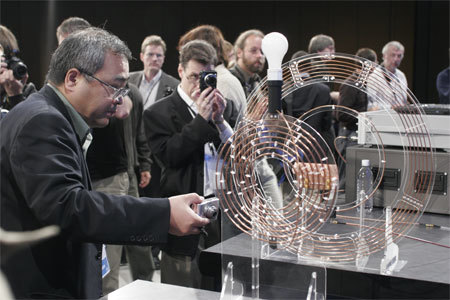
Damit dies in zehn bis zwanzig Jahren gelingen kann, müssen allerdings forschungstechnisch noch viele Dinge vorangebracht werden. So müssen die Empfängerspulen hinsichtlich ihrer Größen reduziert werden. Diese liegen zurzeit noch beim Format der Kofferradios der 1950er Jahre und haben ein Gewicht, das schnellen Transport nahezu ausschließt. Auch bei den Frequenzbereichen der Energieübertragung ist noch einiges zu tun, um die Belastung von Menschen mit Herzschrittmachern zu reduzieren.
gefällt es