| Garantie LCD/Backlight (Jahre): | 3 inkl. Vor-Ort-Service |
| max. Pixelfehler (nach ISO 13406-2): | Klasse II |
| Panelgröße [Zoll] (Paneltechnologie): | 24 (H-IPS) |
| Pixelgröße [mm]: | 0.270 |
| Standardauflösung: | 1.920 x 1.200 (16:10) |
| Sichtbare Bildgröße/-diagonale [mm]: | 518 x 324 / 610 |
| Eingänge, Stecker: | 1x D-Sub VAG (analog), 1x DVI-D (digital) 1x Display Port (digital), USB-Hub |
| Bildfrequenz [Hz]: | 50 – 85 (tatsächlich auch: 24 / 48) |
| max. Zeilenfrequenz/Videobandbreite [kHz/MHz]: | 31,5 – 91,1 und 118,4 / – |
| Farbmodi Preset/User: | 8/8 |
| LCD drehbar/Portrait Modus: | Ja / Ja |
| LCD Display Arm Option: | Ja |
| Ausstattung: | 1 x DisplayPort Kabel, 1 x DVI-D-Kabel, 1x D-Sub VGA-Kabel, CD mit Anleitung, Kurzanleitung |
| Monitormaße (B x H x T) [mm]: | 557 x 378 – 528 x 228 (mit Fuß) |
| Gewicht [kg]: | 10,6 (mit Fuß) |
| Prüfzeichen: | TCO 5.0; CE; TÜV Ergonomics; TÜV GS; C-tick; FCC Class B; PCT/Gost; UL/C-UL or CSA; CCC; ISO 9241-307 (pixel failure class II); MPR II/ MPR III; PCBC/Bmark; PSB; RoHS |
| Leistungsaufnahme On/Stand-by/Off [Watt]: | < 95 / 1 / – (Herstellerangaben) |
Einleitung
Mit der neuen PA-Reihe bringt NEC Bewegung in ihr Produktangebot der „Professional Display“-Reihe. Geplant sind Bildschirme im Größenbereich von 23-Zoll bis 30-Zoll. Wir hatten Gelegenheit, den ersten Vertreter dieser neuen Produktgeneration ausführlich testen zu können.
Der NEC PA241W verbaut ein 24-Zoll großes P-IPS Panel. Da IPS-Varianten bislang faktisch immer über eine hervorragende Blickwinkelstabilität verfügten, erhoffen wir uns ein entsprechend gutes Ergebnis auch für die neueste Entwicklung von LG. Im Gegensatz zum NEC 2490WUXi2 verfügt dieses Modell, aufgrund der WCG-CCFL Hintergrundbeleuchtung, über einen erweiterten Farbraum. NEC verspricht die fast vollständige Abdeckung von AdobeRGB.

Spätestens mit Blick auf die Leistungsdaten der Elektronik wird klar, dass die bewährte „90er“-Reihe durch Geräte der PA-Reihe abgelöst werden soll. Im Zuge dieses Wechsels hat NEC die Elektronik noch einmal ordentlich „aufgebohrt“. Das Kernstück bildet eine programmierbare 14bit 3D-LUT, die, zusammen mit einer Rechengenauigkeit von 16bit pro Kanal, eine überaus potente Basis für eine Hardwarekalibrierung bietet. Hinreichende Bordmittel und Neutralität bzw. Linearität vorausgesetzt, sollte man aber bereits im Rahmen einer Softwarekalibrierung hervorragende Ergebnisse, mit nur geringen Tonwertverlusten, erzielen können. Da NEC die für die Hardwarekalibrierung notwendige Software „SpectraView II“ weiterhin nicht direkt in Europa vertreibt, ist das ein für viele Anwender wichtiger Faktor. Dazu gesellt sich ein nicht zu unterschätzender Problem in Zusammenhang mit dem Einsatz eines Colorimeters, auf das wir im Testbericht noch eingehen werden.
Ein sehr interessantes, neues Feature ist die Farbraumemulation. Zwar gibt es seit längerer Zeit brauchbare Umsetzungen mit fixem Transformationsziel, aber eine flexible Farbraumemulation fand sich bislang nur im absoluten High-End Bereich. Wir sind gespannt, wie sich der NEC PA241W diesbezüglich gegenüber der CG-Reihe von Eizo schlägt, die per Color Navigator hier eine sehr gute Lösung implementiert.
Über DisplayPort kann der PA241W mit 10bit pro Kanal angesteuert werden. Laut NEC arbeitet auch das Panel selbst mit maximal 10bit pro Kanal. Das ist aktuell noch relativ selten (die einzige H-IPS Ausführung in 24-Zoll war das LM240WU5, eingesetzt im HP LP2480zx und LG W2420R). In Bezug auf den Workflow in 8bit ergibt sich für den Nutzer daraus kein signifikanter Unterschied. Eine FRC-Schaltung „rettet“ auch hier den durch die leistungsfähige Elektronik kaum verringerten Tonwertumfang bis zur eigentlichen Darstellung.

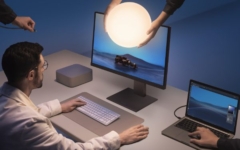


Alle im Test veröffentlichten Ergebnisse wurden am digitalen Ausgang einer nVidia Geforce GTX 280 von Gainward ermittelt. Für den Test der Videofunktionen wurden ein Lumagen RadianceXD und ein iScan VP50 verwendet. Zusätzlich kamen ein OPPO DV-980H als Zuspieler für DVDs und ein Sony S350E für Blu-rays zum Einsatz. Die farbmetrischen Messungen wurden mit einem Spektralfotometer (EyeOne Pro) durchgeführt. Für die Ermittlung des minimalen Schwarzwertes wurde ein Colorimeter (X-Rite DTP94) verwendet.
Lieferumfang
NEC verpackt den PA241W sicher im schlichten und voluminösen Karton. Der abnehmbare Standfuß ist vormontiert.
Der Lieferumfang lässt nur wenig vermissen. Für die Konnektivität zum Rechner ist mit je einem DVI-D-, Display-Port und D-Sub-VGA-Kabel gesorgt. Neben dem obligatorischen Netzkabel mit Kaltgerätestecker fehlt somit nur ein USB-Kabel für den integrierten 3-Port-USB-Hub.
Das vollständige Handbuch befindet sich, in mehrsprachiger Ausführung, als PDF-Datei auf der beigelegten CD. Eine Kurzanleitung ist auch in Papierform vorhanden. Die Software „MultiProfiler“, mit der wichtige Parameter bequem vom Rechner aus gesteuert werden, kann der Anwender inzwischen auf der Internetseite von NEC kostenlos herunterladen. Zum Testzeitpunkt lag uns eine Beta-Version vor.
Optik und Mechanik
Die technischen Veränderungen manifestieren sich nicht im Gehäusedesign. Hier folgt NEC auch beim PA241W dem sehr gefälligen, schnörkellosen Design bisheriger Displays aus „Professional Display“- und „Colour Management“-Reihe. Kleinere Veränderungen betreffen Standfuß und Rückseite des Bildschirms.
Unser Testgerät wurde in der weißen Farbvariation ausgeliefert. Alternativ kann eine schwarze Version gewählt werden. Der nicht aufgeraute, matte Kunststoff macht einen hochwertigen Eindruck. Eine silberne Blende umgibt das Panel.

Mit einer Rahmenbreite von etwa 1,6 cm ist auch ein Mehrschirmbetrieb problemlos möglich. Die Gehäusetiefe fällt dagegen, wie gewohnt, relativ üppig aus.



Die Verarbeitungsqualität ist fast durchgängig auf sehr hohem Niveau. Geringe Spaltmaße, sorgfältig eingepasste Bedienelemente und ein solider Standfuß sprechen hier klar für den PA241W. Etwas aus dem Rahmen fällt hier nur die silberne Blende, die bereits unter leichtem Druck nachgibt. Den insgesamt sehr guten Eindruck kann das aber nicht ernsthaft gefährden.


Die Höhenverstellung hat einen Regelungsbereich von etwa 15 cm. In der niedrigsten Einstellung beträgt der Abstand von Rahmenunterkante zur Tischoberfläche 1,6 cm; in der höchsten Position sind es gut 16 cm. Die maximale Neigung nach hinten ist bei 30 Grad erreicht, während die Neigung nach vorne bei etwa fünf Grad endet.


Die Standfußkonstruktion wurde im Vergleich zu bisherigen Modellen überarbeitet. Mit dem in dieser Ausführung eingelassenen Gelenk ist eine Drehung um bis zu 45 Grad nach links und rechts möglich. Der Monitor bleibt dabei auch auf glatten Oberflächen stets sicher auf seinem Platz stehen.